TECHNOLOGY
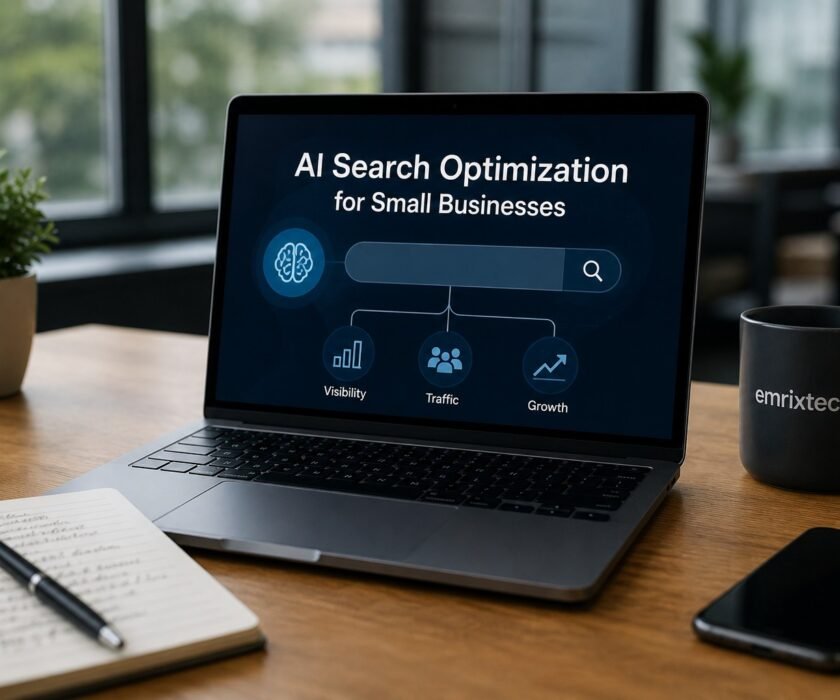
A growing number of potential customers start their research in ChatGPT, Perplexity, or Google AI Mode rather than typing into traditional Google search. When they do, they get a synthesized answer — not a list of links. The businesses that appear in those answers have done something different from businesses that only optimize for traditional search.
The good news for small businesses: AI search is still early, and the content gap is real. Large agencies with established domain authority don’t have AI-optimized content for many specific topics. That’s an opening — and it’s narrowing.
Why Small Businesses Have an Advantage in AI Search Right Now
Traditional SEO heavily favors established domains with years of backlinks. AI search is more interested in content quality and topical depth than raw domain authority. A small business that writes the most specific, useful answer to a specific question can get cited ahead of a corporate site that covers the same topic superficially.
The window for this advantage is probably 12–18 months before most businesses catch on. The bar is low right now. That’s worth acting on.
The Practical Checklist for Small Business AI Search Optimization
- Claim and fully optimize your Google Business Profile — AI Overviews frequently pull business information from GBP for local queries
- Write a clear, standalone definition of your core service in the first 150 words of each service page
- Add a 4–6 question FAQ section to every important page — marked up with FAQPage schema
- Get your page speed under 3 seconds on mobile using Google PageSpeed Insights
- Make sure Googlebot and Bingbot are not blocked in your robots.txt
- Submit your key pages to both Google Search Console and Bing Webmaster Tools
- Write blog content that answers specific questions, not just general overviews
What Content Works Best in AI Search
Specific over general. A post titled “How to Get More Google Reviews for a Naperville Restaurant” will get cited more often than “How to Manage Your Online Reputation.” AI systems match queries to the most specific relevant source — and they tend to prefer the one that most directly answers the question without padding.
Question-and-answer format. FAQ sections, HowTo steps, and Q&A structures are easy for AI to extract and present. If your content is one long essay, add structured sections that break it into answerable chunks.
First-person experience where appropriate. “We’ve worked with 50+ Chicago small businesses on local SEO and the pattern we see most often is…” is more citable than “businesses commonly find that…” because it has a clear, specific source. Generic observations can come from anywhere. Specific experience can’t.
What Not to Do
Don’t stuff your content with AI-targeted phrases. AI systems can tell when content is written for extraction rather than for human readers — and so can Google. Write for humans first, structure for AI second.
Don’t neglect traditional SEO in favor of GEO. Most traffic still comes from Google’s traditional search results. AI search is an additional channel, not a reason to abandon fundamentals. Read: GEO vs SEO: What’s the Difference and Which Do You Need?
Frequently Asked Questions
How do I know if my small business is showing up in AI search?
Search for your business name and key service categories in ChatGPT, Perplexity, and Google AI Mode. Check the cited sources in the responses. Do this monthly — AI citation patterns change as platforms update their retrieval algorithms and new content gets indexed.
Does local SEO help with AI search visibility?
Yes, particularly for Google AI Overviews. A well-optimized Google Business Profile is one of the sources Google AI Overviews pulls from for local business queries. Local citations and consistent NAP information also support how AI systems understand your business’s geographic relevance.
Is AI search optimization expensive for a small business?
Most of it is just better content structure and technical basics — neither requires a large budget. The main investment is time: writing more specific content, setting up proper schema, and submitting to search engines. If you’re already running a website, the incremental cost is low relative to the potential visibility gain.
How long does AI search optimization take to show results?
Faster than traditional SEO in many cases. Technical changes like allowing AI bots and adding schema can show effects in 2–4 weeks. Content-based gains — getting cited for specific topic queries — typically take 4–8 weeks for existing content and longer for building topical authority through a content cluster.
The Complete GEO Cluster — All 6 Posts:
Generative Engine Optimization (GEO): The Full Guide
GEO vs SEO: What’s the Difference and Which Do You Need?
How to Get Cited in Google AI Overviews in 2026
FAQ Schema Markup: A Plain-English Guide
How to Rank in ChatGPT Search Results in 2026
How to Optimise Your Content for Perplexity AI in 2026
Also Read:
How to Rank Your Business on Google in 2026
Local SEO in Chicago: The Complete 2026 Guide
How to Get My Business on Google Maps